National Park Fees in 2026: What Changed and How to Save
National park fees changed in 2026: an $80 resident annual pass, a $250 nonresident pass, a $100 nonresident fee at 11 popular parks, and resident-only fee-free days. Here is what it costs now and how to pay less.
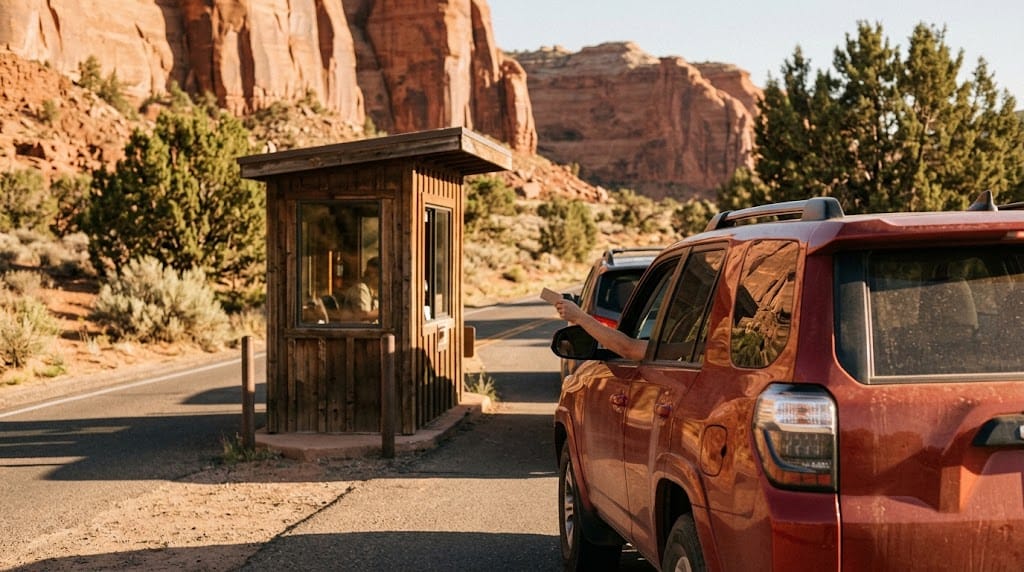
National park fees changed on January 1, 2026, and the changes are bigger than a price bump. The annual America the Beautiful pass now has two prices, one for U.S. residents and one for everyone else. Eleven of the busiest parks charge international visitors an extra $100 per person. And the list of free entrance days was rewritten, with free days now limited to U.S. residents.
Here is what changed, what park entry costs now, and the simplest ways for every visitor to pay less, using figures from the National Park Service and the Department of the Interior as of October 2026.
What changed in 2026
The Interior Department announced the new fee structure on November 25, 2025, and it took effect January 1, 2026. The main changes:
- Two annual pass prices. The America the Beautiful annual pass costs $80 for U.S. residents and $250 for nonresidents.
- A $100 nonresident fee at 11 parks. Non-U.S. residents age 16 and older pay $100 per person on top of the standard entrance fee at these parks, unless they hold an annual pass.
- Fee-free days for residents only. Free entrance days now apply to U.S. citizens and residents. Nonresidents pay entrance and nonresident fees as usual.
- Digital passes. You can buy an annual pass on Recreation.gov and use it from your phone right away.
- Two motorcycles per pass. Annual passes now cover two motorcycles instead of one.
2026 national park pass prices
The America the Beautiful pass covers entrance fees and standard day-use fees at sites run by six federal agencies, including the National Park Service, U.S. Forest Service, and Bureau of Land Management. These are the 2026 prices from NPS:
| Pass | Who qualifies | Price |
|---|---|---|
| Resident Annual | U.S. citizens and residents | $80 |
| Non-Resident Annual | Non-U.S. residents | $250 |
| Senior Annual | U.S. citizens and residents 62+ | $20 |
| Senior Lifetime | U.S. citizens and residents 62+ | $80 |
| Military Annual | Current U.S. military and dependents | Free |
| Military Lifetime | Gold Star Family members and veterans | Free |
| Access Pass | U.S. citizens and residents with a permanent disability | Free |
| 4th Grade Pass | U.S. 4th graders | Free |
| Volunteer Pass | Volunteers with 250+ service hours | Free |
A few rules apply to every pass. You must show a valid photo ID with the pass. Passes are non-refundable and non-transferable, and NPS will not replace a lost or stolen one. To buy a resident pass, you will be asked for proof of U.S. citizenship or residency, such as a U.S. passport, a state-issued driver's license or ID, or a permanent resident card.
The $100 nonresident fee: which parks charge it
Non-U.S. residents age 16 and older pay a $100 per-person fee, plus the regular entrance fee, at these 11 parks:
- Acadia (Maine)
- Bryce Canyon (Utah)
- Everglades (Florida)
- Glacier (Montana)
- Grand Canyon (Arizona)
- Grand Teton (Wyoming)
- Rocky Mountain (Colorado)
- Sequoia and Kings Canyon (California)
- Yellowstone (Wyoming, Montana, Idaho)
- Yosemite (California)
- Zion (Utah)
The fee is charged per person, per park. A family of four adult international visitors driving into Yellowstone would owe the $35 vehicle fee plus $400 in nonresident fees. Visit Zion and Bryce Canyon on the same trip and the nonresident fees apply again at each park.
The math changes quickly with the $250 Non-Resident Annual Pass. NPS says any valid America the Beautiful pass or park-specific annual pass covers both entrance and nonresident fees for the pass holder and passengers in a private vehicle. For international visitors planning to see two or more of these parks, the $250 pass will usually cost less than paying at the gate.
The same rule helps mixed groups. If a U.S. resident in the car holds a valid annual pass, NPS says it covers the entrance and nonresident fees for passengers in that private vehicle. At parks that charge per person, a pass covers the holder plus three additional adults.
What a single park visit costs
Most parks that charge sell a standard entrance pass that is good for seven days. Current prices at several popular parks, from each park's NPS fee page:
- Yellowstone, Grand Canyon, Zion, Yosemite, Acadia: $35 per private vehicle, $30 per motorcycle, $20 per person on foot or bike. Children under 16 do not need their own pass.
- Rocky Mountain: $30 for a 1-day vehicle pass or $35 for 7 days.
- Arches: $30 per private vehicle, or a $55 park-specific annual pass.
- Grand Canyon annual park pass: $70, valid only at Grand Canyon.
- Great Smoky Mountains: no entrance fee, but parking for more than 15 minutes requires a parking tag: $5 daily, $15 weekly, or $40 annual.
Entrance fees do not include camping. Campsites, guided tours, and lodges inside parks are booked and paid for separately, often months ahead on Recreation.gov or through park concessioners. Some parks also charge separately for reservations during busy seasons. Acadia, for example, charges $6 for a Cadillac Summit Road vehicle reservation, and that is on top of the entrance pass. Check the park's own page before you go.
Many sites in the National Park System do not charge an entrance fee at all, including a large number of national monuments, historic sites, and memorials. Check the park's NPS page before you assume you need a pass.
2026 fee-free days
On these days, entrance fees are waived for U.S. citizens and residents at parks that normally charge:
- February 16 (Presidents Day)
- May 25 (Memorial Day)
- June 14 (Flag Day)
- July 3 to 5 (Independence Day weekend)
- August 25 (National Park Service's 110th birthday)
- September 17 (Constitution Day)
- October 27 (Theodore Roosevelt's birthday)
- November 11 (Veterans Day)
Two of those dates are still ahead this year: October 27 and November 11. Fee-free days cover entrance fees only. Camping, tours, reservations, and other amenity fees still apply. Nonresidents pay normal entrance and nonresident fees on these days.
The 2026 list differs from past years. Martin Luther King Jr. Day and Juneteenth, both free days in 2025, are not on it, and Veterans Day is the only date carried over from the 2025 list. The 2027 dates had not been announced as of early October 2026.
How to save on national park fees
Do the annual pass math
At $35 per vehicle, the $80 Resident Annual pass pays for itself on the third park visit, or sooner if you also use Forest Service or BLM day-use sites that it covers. If you will visit only one park more than twice in a year, check whether that park sells its own annual pass. Grand Canyon's is $70 and Arches' is $55.
Use the senior passes
U.S. citizens and residents 62 and older can buy a lifetime pass for $80, the same price as one year of the standard resident pass. The $20 senior annual pass is an option if you are not sure you will use the lifetime pass enough.
Claim the free passes you qualify for
Current military members and dependents get a free annual pass. Veterans and Gold Star Families get a free lifetime pass. U.S. residents with a permanent disability qualify for the free Access Pass. U.S. fourth graders can get a free 4th Grade Pass.
Plan around fee-free days, with care
Free days save $20 to $35 per car, but the most famous parks get crowded with visitors. If you go, arrive early, check the park's plan your visit page for road and trail conditions, and remember that timed-entry or vehicle reservations at some parks still apply.
Look past the famous 11
Many NPS sites never charge entrance fees, and state parks near the big names can offer the same scenery and wildlife for less. Our guide to top U.S. national parks covers the big names, and our list of underrated U.S. destinations includes less crowded options. If you are camping, see our picks for scenic camping spots.
Buy the digital pass ahead of time
Buying your pass on Recreation.gov before you arrive saves time at the gate, and you can use it right away from your phone. Bring photo ID, since rangers check it against the pass. Booking campsites and tours early matters more than the pass for most travelers, because popular dates sell out.
FAQ
How much is the national park pass in 2026?
The America the Beautiful annual pass is $80 for U.S. citizens and residents and $250 for nonresidents. Seniors 62 and older who are U.S. citizens or residents pay $20 a year or $80 for a lifetime pass.
Do kids pay national park entrance fees?
Children under 16 do not need their own entrance pass at the parks listed above, and the $100 nonresident fee applies only to visitors 16 and older.
Does my old America the Beautiful pass still work?
Yes. NPS says all valid passes, regardless of the year issued, cover entrance and nonresident fees for the pass holder and passengers in a private vehicle.
What are the remaining free national park days in 2026?
October 27 (Theodore Roosevelt's birthday) and November 11 (Veterans Day). They apply to U.S. citizens and residents only.
Do I need a pass for national parks with no entrance fee?
No pass is needed at sites without an entrance fee. Some, like Great Smoky Mountains, charge for parking instead, and some charge for tours, camping, or reservations.
Sources
- National Park Service: Entrance passes
- National Park Service: Nonresident fees
- U.S. Department of the Interior: Modernized, more affordable national park access
- NPS: Yellowstone fees and passes
- NPS: Grand Canyon fees and passes
- NPS: Rocky Mountain fees and passes
- NPS: Arches fees and passes
- NPS: Acadia fees and passes
- NPS: Great Smoky Mountains fees and passes
- Scripps News: National Park Service fee-free days for 2025