How to Stay Healthy While Traveling: Simple Tips for the Road
A stomach bug, a cold from a full flight, a body clock stuck on home time and a bad sunburn can each cost you part of a trip. You can lower the odds of all four with a few habits, and most of them start before you leave. This guide covers how to stay healthy while traveling: the doctor visit, a small health kit, the travel day, food and water, jet lag, sun, and health coverage. The advice follows CDC Travelers' Health, TSA and Medicare.gov guidance as of October 2026. Those pages get updated, so check them before your trip, and ask your own doctor about anything specific to your health.
A month before: see a doctor or travel clinic
For a trip outside the US, the CDC says to see a health care provider who knows travel medicine at least a month before you go, and its routine vaccines page says 4 to 6 weeks. Some vaccines need several doses or a few weeks to work, so earlier is better. If you leave sooner, a visit is still worth it, since the CDC notes some vaccines can be given on a faster schedule.
- Check the destination. The CDC Travelers' Health destination pages list the vaccines and medicines recommended for each country.
- Get current on routine vaccines. The CDC's list includes flu, measles, and tetanus, diphtheria and pertussis. Bring a copy of your immunization record.
- Bring up your own health. Tell the provider if you are pregnant, have a chronic condition, or have a weakened immune system. Some vaccines and medicines are not right for everyone.
- Refill early. The CDC suggests using the same visit to get any extra medicine you need for the trip.
Pack a small travel health kit
The best travel health kit is a small pouch you actually carry. The CDC's packing list for travelers includes these, adjusted to where you are going:
- Prescription medicines, preferably in their original labeled bottles, plus copies of your prescriptions for medicines, glasses and medical supplies.
- Hand sanitizer with at least 60% alcohol, or wipes.
- Sunscreen with UVA and UVB protection, SPF 15 or higher.
- Insect repellent with an active ingredient like DEET or picaridin, if bugs are a risk where you are going.
- A basic first-aid kit.
Keep medicines in your carry-on, not your checked bag, in case your luggage gets lost. TSA allows medically necessary liquids over 3.4 ounces in a carry-on if you tell the officer at the start of screening. One more check: some medicines sold over the counter in the US are illegal in other countries. The CDC says to check with that country's embassy or consulate before you go. If you take a daily vitamin or mineral supplement at home, pack it, and ask your doctor before starting anything new for the trip. For everything else that goes in the bag, use our travel packing checklist.
At the airport and on the plane
Bring an empty water bottle through security (TSA allows it) and fill it at a fountain at the gate, so you can stay hydrated without paying airport prices. Wash your hands with soap for at least 20 seconds before you eat, and use sanitizer when there is no sink.
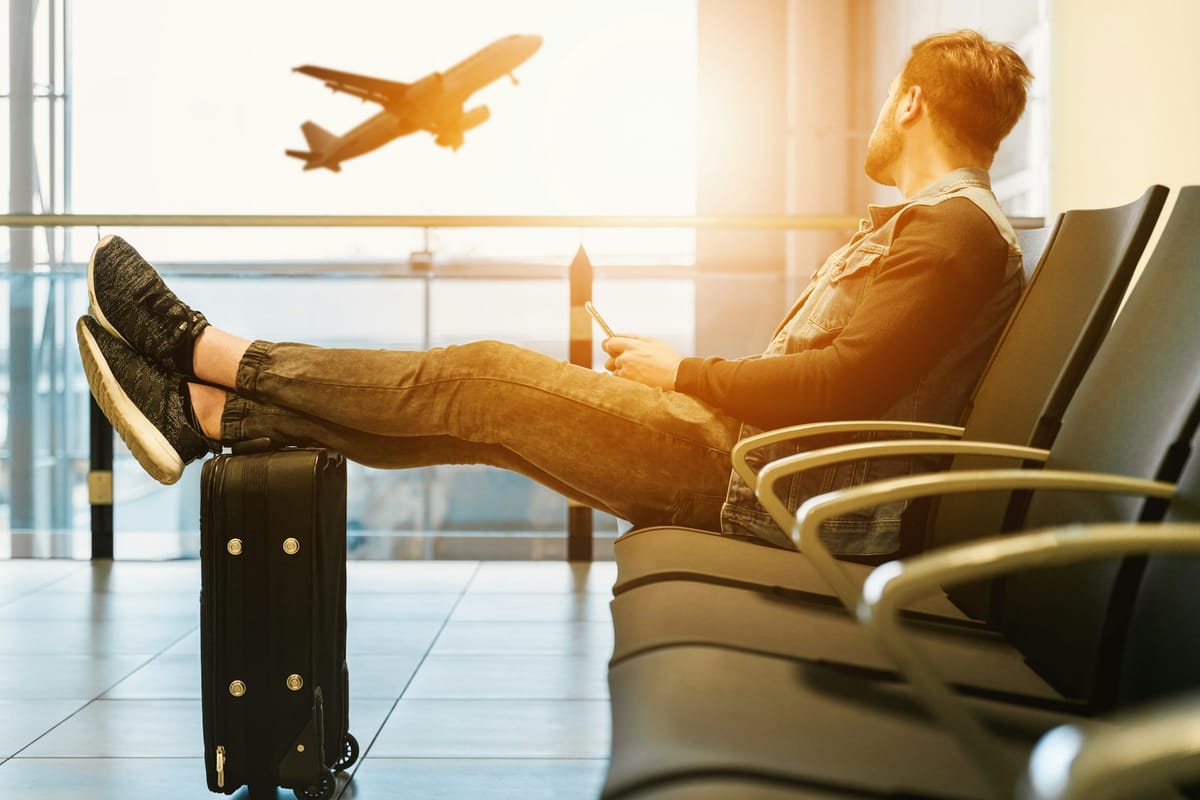
Long trips carry one risk people forget: blood clots. The CDC says anyone traveling more than 4 hours, by air, car, bus or train, can be at risk, and the risk is higher with older age, recent surgery or estrogen-containing birth control. To lower it:
- Get up and walk around every 1 to 2 hours when it is safe to do so.
- In your seat, stretch your legs out and flex your ankles to work your calf muscles.
- If you have risk factors, ask your doctor before the trip whether compression stockings or other steps make sense for you.
The CDC says to contact a doctor as soon as possible about swelling, pain, warmth or redness in a leg or arm during or after a trip. Trouble breathing, a fast or irregular heartbeat, or chest pain that gets worse with a deep breath means getting medical help right away.
Food and drink where the water may not be safe
In places where tap water might be contaminated, the CDC advises:
- Drink from factory-sealed bottles or cans, and use bottled or disinfected water to brush your teeth.
- Skip ice and fountain drinks, which are usually made with tap water. Coffee and tea are fine if served steaming hot.
- Eat food that is cooked and served hot. Peel fruit yourself, and pass on cut fruit and fresh salads.
- Avoid raw meat and seafood, and choose pasteurized milk from sealed bottles. Pregnant travelers and people with a weakened immune system should avoid unpasteurized milk, cheese and yogurt.
You do not need a perfect diet on vacation to eat healthy. Small meals around long flights are easier on your stomach, and a mix of hot cooked dishes and fruit you peel yourself covers most of what you need.
Sleep and jet lag
The CDC's jet lag tips are simple: a few days before you fly, shift your bedtime an hour or two in the direction of your destination. Once you arrive, follow the local schedule, get daylight during the day, and keep naps to 15 to 20 minutes. Use caffeine and exercise during the day but not in the evening, drink plenty of water, and go easy on alcohol, which the CDC says disrupts sleep. If an event matters, like a wedding or a big hike, try to arrive at least 2 days early.
Sun and heat
Put on broad-spectrum sunscreen, SPF 15 or higher, before you go outside. The CDC says to reapply if you are out for more than 2 hours and after swimming, sweating or toweling off. UV rays are strongest from 10 a.m. to 4 p.m., so plan shade or indoor time then, and hydrate more on hot days.
Check your health coverage before you go
Know what your health plan covers away from home. Medicare.gov says Medicare usually does not cover health care while you are traveling outside the US, with a few exceptions, and that some Medicare Supplement (Medigap) policies may cover emergency care abroad. If your plan pays little abroad, our guide to whether travel insurance is worth it walks through what to look for. For crime, scams and emergencies abroad, see how to stay safe while traveling internationally.
A short checklist for staying healthy on the road
- One month out: travel clinic visit, destination page, refills.
- Packing: medicines in original bottles in your carry-on, copies of prescriptions, sanitizer, sunscreen, repellent, first-aid kit.
- Travel day: empty water bottle, wash hands, walk every 1 to 2 hours on long trips.
- On the ground: sealed drinks and hot food where water is unsafe, local sleep schedule, sunscreen.
Sources: CDC Travelers' Health (FAQ, Routine Vaccines, Pack Smart, Food and Water Safety, Jet Lag), CDC Blood Clots and Travel, CDC Clean Hands, CDC Sun Safety, TSA What Can I Bring, Medicare.gov Travel outside the U.S.