Where to Experience Día de los Muertos in the US and Mexico
Confirmed 2026 dates for Día de los Muertos events in Mexico City, Oaxaca, San Antonio, Los Angeles, Tucson, Albuquerque and Chicago, plus planning and etiquette tips.
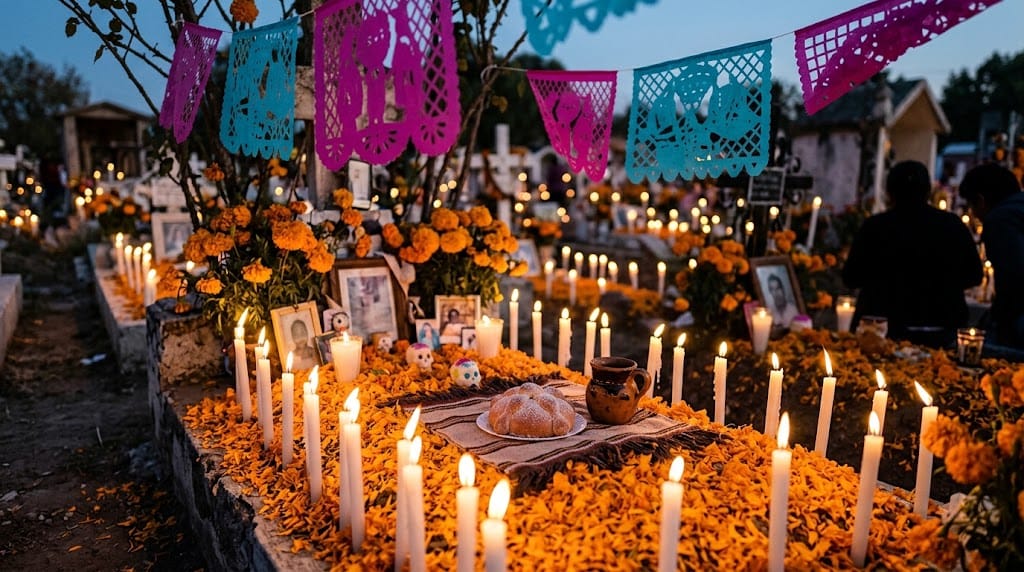
Día de los Muertos, the Day of the Dead, is when families in Mexico welcome back the souls of their loved ones with altars, marigolds, candles, food, and music. The main days are November 1 and 2, but public celebrations now stretch across late October in both Mexico and the United States. This guide covers where to experience Día de los Muertos in 2026, with confirmed dates for the major events, plus how to plan the trip and how to take part respectfully.
What Día de los Muertos is, and when it happens
UNESCO recognizes the Indigenous festivity dedicated to the dead as part of Mexico's intangible cultural heritage, inscribed in 2008. UNESCO describes it as a celebration held each year from the end of October to the beginning of November, blending pre-Hispanic beliefs with Catholic traditions brought in the sixteenth century. That is why the dates line up with All Saints’ Day (November 1) and All Souls’ Day (November 2). Related observances for the dead also take place in other parts of Latin America, but the best-known celebrations are held throughout Mexico.
In many communities, November 1 is set aside for children who have died and November 2 for adults. Families decorate the graves with flowers and candles and build an ofrenda (a Day of the Dead altar) at home with cempasúchil (marigolds), photographs, pan de muerto, sugar skulls, and the person's favorite food and drink. Calaveras (skulls), sugar skulls, and the elegant skeleton figure La Catrina show up everywhere, from parades to bakery windows.
It is a family remembrance first, honoring deceased loved ones, and a public festival second. Keep that in mind as you plan, and see the etiquette section below.
Best places to experience Day of the Dead in Mexico
Mexico City
Mexico City has the biggest public program of Day of the Dead celebrations in Mexico, and most of it is free. Confirmed 2026 dates from the city's announced schedule, as reported in September 2026:
- Desfile de Alebrijes Monumentales: Saturday, October 17, giant painted fantasy creatures parade from the Zócalo toward Paseo de la Reforma, then stay on display along Reforma.
- Mega Procesión de las Catrinas: Sunday, October 25, on Paseo de la Reforma.
- Ofrenda Monumental in the Zócalo: October 29 to November 2, with a 32-meter La Catrina sculpture, sawdust carpets, and marigolds.
- Gran Desfile de Día de Muertos: Saturday, October 31, at 2 p.m., along Paseo de la Reforma to the Zócalo, with floats, bands, dancers, and giant puppets.
The big Day of the Dead parade is a modern addition. Mexico City first staged it in 2016, after the 2015 James Bond film Spectre opened with a fictional Day of the Dead parade. Mexico City also held a special Día de Muertos parade on June 13, 2026, for the World Cup, so do not confuse the two when you search for dates.
San Andrés Mixquic
For a more traditional experience without leaving Mexico City, Mixquic in the southeastern borough of Tláhuac is known for its cemetery celebration. Its 2026 program runs October 31 to November 2, ending with La Alumbrada on the night of November 2, when thousands of candles light the graves. It is one of the best places to see a traditional Day of the Dead vigil close to the capital. Expect heavy crowds and plan transport there and back before you go.
Day of the Dead in Oaxaca
Oaxaca City and the surrounding valleys are the most popular destination for travelers who want neighborhood traditions over a big parade. Comparsas (costumed street processions with brass bands) wind through the city in the days around the holiday, and families hold candlelit vigils in cemeteries such as the panteón in Santa Cruz Xoxocotlán. In the Etla valley, the muerteada is a costumed street celebration that can run through the night.
Practical notes if you plan to celebrate Día de Muertos in Oaxaca in 2026 (several tours in Oaxaca sell out early too):
- Timing: the core days are November 1 and 2, but activities typically start in the last days of October. Arriving by October 29 or 30 gives you the build-up.
- Schedule: comparsa routes and times change every year. The Oaxaca state government publishes the official program each fall.
- Eat the holiday: Oaxaca’s markets fill with Day of the Dead food such as pan de muerto, chocolate, and mole, all of which also end up on family altars.
- Book early: hotels in central Oaxaca fill months ahead for the holiday week, and rates rise.
- Cemetery visits at night: a guided Day of the Dead tour handles transport between towns and helps you behave appropriately at family graves.
A note on Pátzcuaro and Isla Janitzio in Michoacán
The candlelit vigils on Isla Janitzio and around Lake Pátzcuaro in Michoacán are some of the most photographed Day of the Dead traditions in Mexico. However, the U.S. State Department lists Michoacán at Level 4, "Do Not Travel," with limited exceptions such as the city of Morelia, and in August 2026 U.S. government activities in the state were suspended. For 2026, we suggest Mexico City or Oaxaca instead. Check the current advisory for any Mexican state at travel.state.gov before you book. Mexico overall is at Level 2, "Exercise Increased Caution."
Best places to celebrate Day of the Dead in the U.S.
You do not need a passport to see large, community-led Day of the Dead celebrations. These U.S. events have confirmed 2026 dates.
San Antonio, Texas
- Muertos Fest: October 23 to 25, 2026, at Hemisfair downtown. Free admission, 80+ handmade altars, two processions, and workshops. Hours are 5 to 11 p.m. Friday, 10 a.m. to 11 p.m. Saturday, and noon to 9 p.m. Sunday, with sensory-friendly hours Friday from 5 to 7 p.m. Organizers report 135,000+ attendees.
- Día de los Muertos River Parade: Friday, October 23, with illuminated floats on the San Antonio River. Seating is ticketed through the River Walk's official site.
- Calaverita Run 5K and Family Walk: Saturday, October 24, at Pearl.
- All month: the River Walk's Tradition Trail of altars and installations runs October 2 to November 2.
Los Angeles, California
- Hollywood Forever Cemetery: the 27th annual Día de los Muertos is Saturday, October 24, 2026, from noon to midnight, with altars, processions, and performances. It is ticketed and draws big crowds.
- Olvera Street: October 25 to November 2, free and family-friendly, with nightly processions and the Carrera de los Muertos 5K on October 31.
- Gloria Molina Grand Park: Downtown Día de los Muertos, October 24 to November 2, with 17 community altars.
Tucson, Arizona
The All Souls Procession is a community walk of remembrance that has grown into one of the largest in the country. The 2026 weekend runs November 6 to 8, with the free procession on Sunday, November 8, at 6 p.m. It starts in Barrio Hollywood at Speedway and Grande and ends with a finale ceremony at 8 p.m. in the Mercado District. Participants carry photos and memorials of loved ones; visitors are welcome to walk.
Albuquerque, New Mexico
The City of Albuquerque lists the Muertos and Marigolds 2026 celebration and procession for Sunday, November 1, from noon to 4 p.m., with the procession at 2 p.m., at the Westside Community Center (1250 Isleta Blvd SW) in the South Valley.
Chicago, Illinois
The National Museum of Mexican Art in Pilsen holds one of the longest-running Día de los Muertos exhibitions in the U.S. The 2026 show, "Where Memory Lives: 40 Years of Día de Muertos," runs September 25 to November 29, 2026. Admission is free. It is a good choice if you want depth and context rather than a street party.
San Francisco, California
In the Mission District, a community procession and the Festival of Altars at Garfield Park, produced by the Marigold Project, take place on November 2 each year. The organizers had not posted 2026 details at the time of writing, so check dayofthedeadsf.org closer to the date.
Day of the Dead travel tips
- Book flights and rooms now. For a trip to Mexico, remember Mexico City and Oaxaca are busy the whole last week of October. If prices are high, read our tips on booking cheap airfare.
- Choose your style. Day of the Dead parade and big festivals: Mexico City, San Antonio, Hollywood Forever. Family and cemetery traditions: Oaxaca and Mixquic. Quiet, reflective, free: Chicago's museum or a community procession.
- Plan around closures. Big parade days close major avenues. Use public transit and allow extra time.
- Carry cash and layers. Small vendors often take cash only, and nights in Oaxaca and Mexico City can get cool in late fall.
- Check safety and entry rules. Our guide to staying safe while traveling internationally covers the basics.
How to celebrate respectfully
- It is not Halloween. Día de los Muertos is about honoring the dead. Catrina face paint is common at public festivals, but follow the lead of local participants.
- In a cemetery, you are a guest. Keep your voice low, do not step on graves, and stay off the altars.
- Ask before photographing people, especially families at gravesites. Skip the flash.
- Do not touch ofrendas or take items from them.
- Buy from local makers. Pan de muerto, papel picado, and marigolds from local bakeries and markets support the communities hosting you.
For more on traveling as a good guest, see our cultural etiquette tips for travelers and our roundup of festivals around the world.
Día de los Muertos FAQ
When is Día de los Muertos in 2026?
The traditional days are Sunday, November 1, and Monday, November 2, 2026. Many public events take place in the two weeks before, including Mexico City's Gran Desfile on Saturday, October 31.
What is the best place to celebrate Día de los Muertos?
For a big public celebration, Mexico City’s parades and Zócalo altar. For family and cemetery traditions, Oaxaca. In the U.S., San Antonio's Muertos Fest and the Los Angeles events are the largest, and Tucson's All Souls Procession is a moving community walk.
Is Día de los Muertos the same as Halloween?
No. They fall close together, but Día de los Muertos is a remembrance of family members who have died, with roots in Indigenous Mexican traditions and Catholic All Saints' and All Souls' days.
Can visitors go to cemeteries during Día de los Muertos?
Many cemeteries welcome respectful visitors, and some, like Mixquic, are known for it. Be quiet, do not step on graves, and ask before taking photos of people.
Sources
- UNESCO: Indigenous Festivity Dedicated to the Dead
- ADN40: Día de Muertos 2026 en CDMX, desfiles y actividades
- Muertos Fest San Antonio
- Visit San Antonio: Day of the Dead River Parade
- Discover Los Angeles: Celebrate Día de los Muertos in Los Angeles
- Día de los Muertos at Hollywood Forever
- All Souls Procession: 2026 Events
- City of Albuquerque: 2026 Hispanic Heritage Month
- National Museum of Mexican Art: Where Memory Lives
- Day of the Dead SF (Marigold Project)
- LatAm Travellers: Mexico Level 4 States in 2026 (summary of U.S. State Department advisories)