US National Parks Guide: Where to Go by Region, Permits and the Annual Pass
The National Park Service runs 434 sites, but only some carry the "national park" name. This guide groups well-known parks by region and by the kind of trip they suit, then covers reservations, permits, passes and timing. Park rules change from season to season, so we name the NPS page behind each one; check it again before you go.
How the national park system works
The national park system includes national parks, monuments, historic sites, seashores, battlefields and more. Yellowstone National Park was the first national park, created by an act signed by President Ulysses S. Grant on March 1, 1872. Since then the national parks in the United States have grown to include deserts, glaciers, volcanoes, swamps, caves and coral reefs, nearly every kind of landscape in the country.
For trip planning, check three things for any park you are considering.
- Access: some parks sit next to an interstate; others, like Gates of the Arctic in Alaska, have no roads into them at all.
- Season: high mountain roads and trails close for snow, and desert parks can be dangerously hot in summer.
- Reservations: a handful of parks control entry at peak times, and some popular hikes need permits. More on that below.
The Southwest: canyons, arches and hoodoos
Utah and Arizona have many well-known parks within a day's drive of each other, so several fit on one road trip.
- Grand Canyon National Park (Arizona): Most visitors see it from the rim viewpoints and a short walk below the edge; hiking to the river and back in one day is a serious effort in heat.
- Zion National Park (Utah): sandstone cliff walls above the Virgin River. The Angels Landing hike follows a narrow fin with chains, and NPS requires a permit for everyone who goes past Scout Lookout. Permits come through a seasonal lottery or a day-before lottery on Recreation.gov, with a $6 application fee.
- Bryce Canyon National Park (Utah): amphitheaters full of hoodoos, the orange rock spires the park is known for. The rim trail gives easy views; trails down among the hoodoos are short but steep on the climb back.
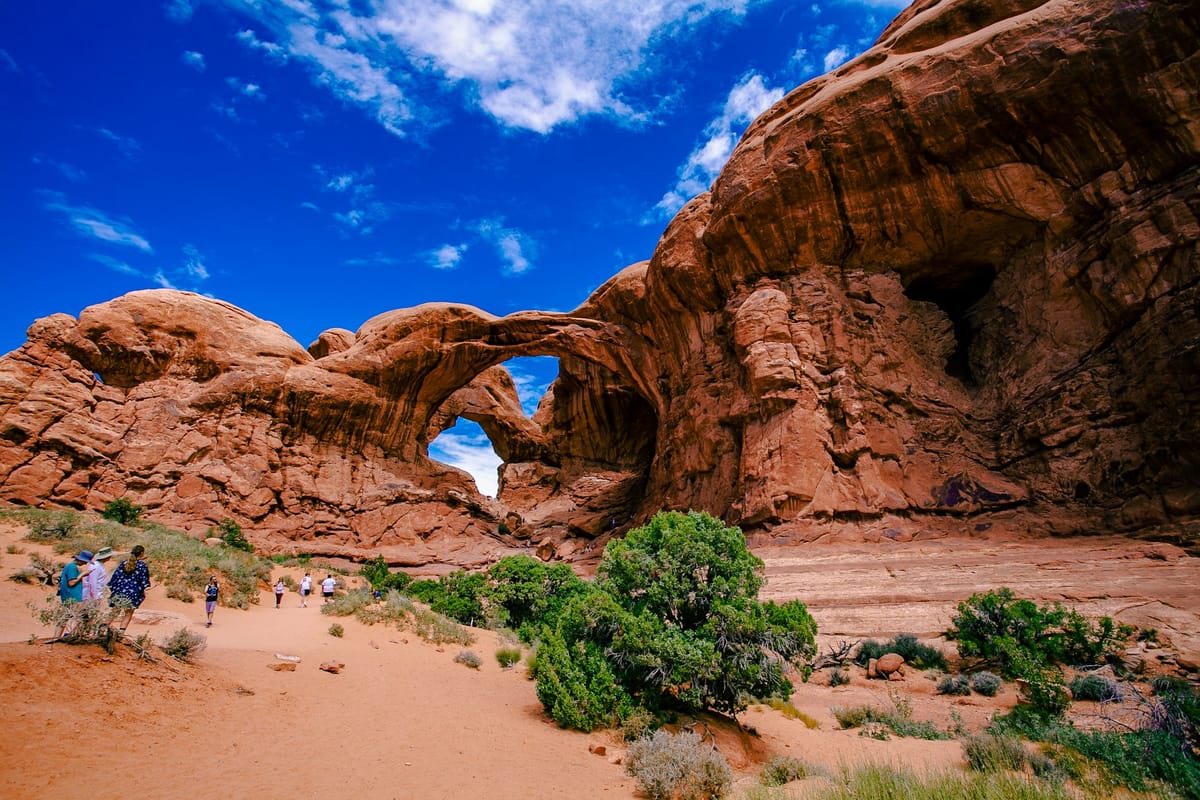
- Arches National Park (Utah): sandstone arches, fins and balanced rocks near Moab. NPS said in February 2026 that Arches would not use a timed entry system this year, so arrive early or late to avoid full parking lots.
- Canyonlands National Park (Utah): next door to Arches, with big overlooks from the Island in the Sky district and far more remote backcountry.
Spring and fall are the comfortable seasons for hiking here. Summer brings heat, and many trails have little shade.
California: granite, giant trees and the desert
- Yosemite National Park: granite cliffs, Half Dome, El Capitan and some of the best-known waterfall views in the country. The Half Dome cables require a permit, issued by a preseason lottery in March and a daily lottery two days ahead while the cables are up. NPS also said Yosemite would not require advance reservations to enter in 2026 and would manage traffic in real time instead.
- Sequoia National Park: home of the General Sherman Tree, which NPS says holds more wood in its trunk than any other tree on Earth. Kings Canyon National Park sits next door and is managed with it.
- Death Valley National Park: the lowest point in North America at Badwater Basin, 282 feet below sea level, according to NPS. Visit from late fall to early spring; summer heat is extreme.
- Joshua Tree National Park: boulder piles and Joshua trees in the California desert, popular for winter camping and stargazing.
- Redwood National Park: coastal redwood groves on the far north coast, managed jointly with three California state parks under a 1994 agreement. Pair it with Oregon's Crater Lake for a longer drive.
Camping fills up fast in California parks. For campground ideas beyond the parks, see our guide to scenic places to go camping.
The Rockies: geysers, peaks and wildlife
- Yellowstone National Park (Wyoming, Montana and Idaho): NPS says the park has more than 500 active geysers, about half of the world's total, including Old Faithful. Bison, elk and bears are common sightings from the road. Stay on boardwalks in thermal areas; the ground and water can be scalding.
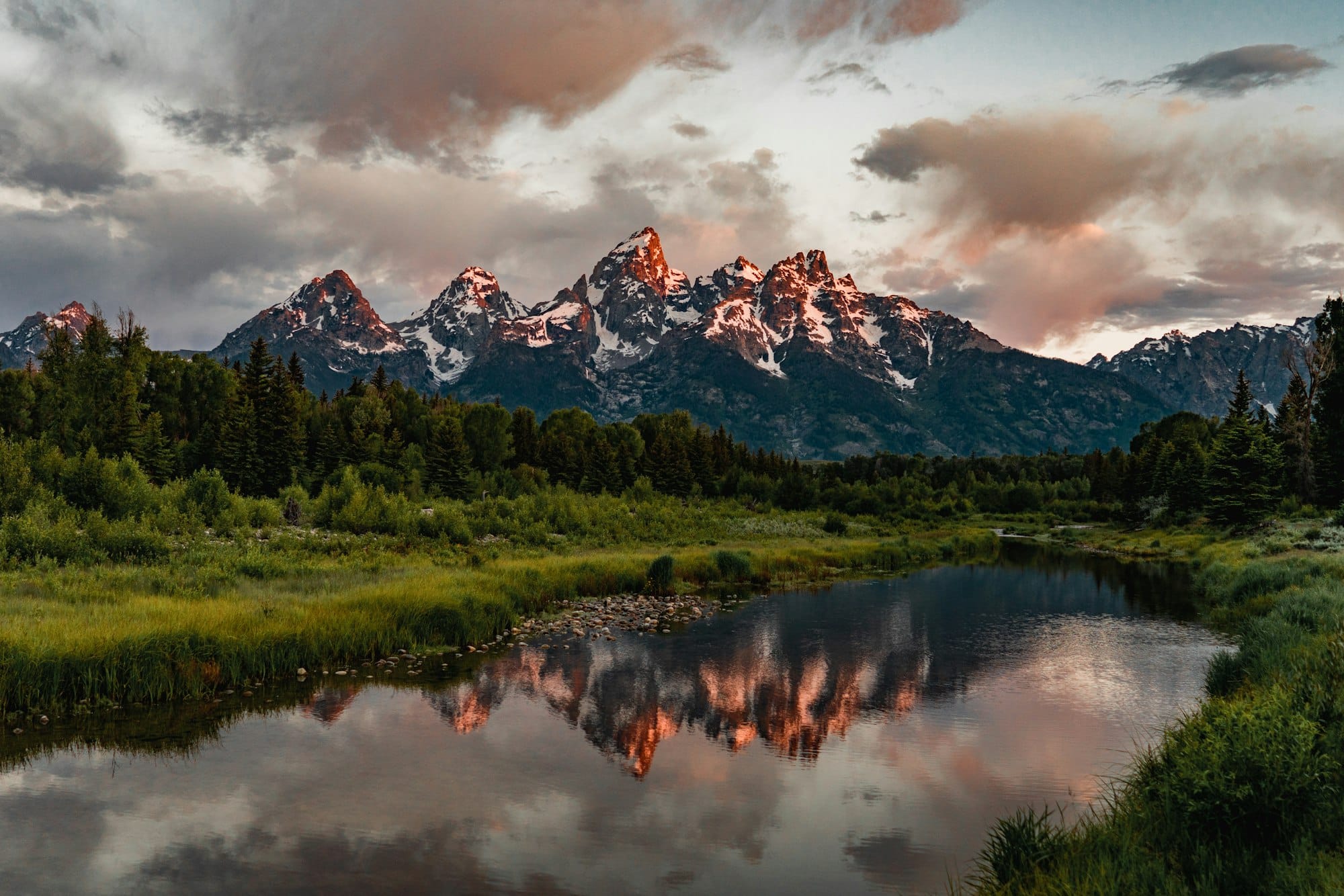
- Grand Teton National Park (Wyoming): a short drive south of Yellowstone. The Grand Teton peak and the rest of the range rise sharply above the valley, with easy sunrise views across the Snake River and the lakes.
- Glacier National Park (Montana): Going-to-the-Sun Road is one of the best-known scenic drives in the West. For 2026, NPS said Glacier would not use a park-wide vehicle reservation system but would limit parking at Logan Pass and divert traffic when it gets too busy.
- Rocky Mountain National Park (Colorado): alpine tundra, elk and Trail Ridge Road. This is the park that kept timed entry in 2026: from late May to mid-October, you need a Recreation.gov reservation to enter between 9 a.m. and 2 p.m., with a longer window on the Bear Lake Road corridor. The reservation costs a $2 processing fee on top of the entrance pass.
Grand Teton and Yellowstone together are a classic pairing for a first national park in the USA trip. Plan at least four or five days for both.
The Pacific Northwest and Alaska
- Mount Rainier National Park (Washington): a glacier-covered volcano with wildflower meadows on its upper slopes in summer. Rainier National Park trails at high elevation often hold snow into July.
- Olympic National Park (Washington): three parks in one: rainforest valleys, mountain peaks and wild Pacific beaches. Roads reach each area from the edges of the park, so plan separate days for each.
- North Cascades National Park (Washington): jagged peaks and turquoise lakes, with few visitors compared with Rainier.
- Denali National Park and Preserve (Alaska): home of Mount McKinley, which NPS lists at 20,310 feet, the highest point in North America. Private cars can drive only the first part of the park road, so most visitors ride buses deeper into the park.
The East: mountains, coast and caves
- Great Smoky Mountains National Park (North Carolina and Tennessee): forested ridges, old farm buildings and many waterfall hikes. There is no entrance fee, but NPS requires a parking tag for any vehicle parked longer than 15 minutes: $5 daily, $15 weekly or $40 annual when we checked. Tags must be physical and displayed.
- Acadia National Park (Maine): rocky coast, carriage roads and Cadillac Mountain. Driving the Cadillac Summit Road needs a vehicle reservation in the main season (May 20 to October 25 in 2026; NPS posts new dates each year). Reservations are sold only on Recreation.gov, $6 when we checked, and vehicles over 21 feet are not allowed.
- Shenandoah National Park (Virginia): Skyline Drive runs the length of the park, with many short hikes off the road and fall color in October.
- Mammoth Cave National Park (Kentucky): cave tours underground; book a tour ahead in busy months.
- Everglades National Park (Florida): wetlands, alligators and wading birds, best in the drier winter months.
Hawaii: volcanoes and sunrise above the clouds
Hawai'i Volcanoes National Park on the Big Island protects Kilauea and Mauna Loa, two active volcano systems. Conditions change with volcanic activity, so check the park's alerts page the day you go. For more on where to see lava and craters, read our guide to Hawaii volcano viewpoints.
Haleakala National Park on Maui is famous for sunrise from the summit. You need a reservation to drive up between 3 a.m. and 7 a.m.; NPS releases them on Recreation.gov up to 60 days ahead, at $1 per vehicle, plus the entrance fee. They often sell out fast. The summit is cold before dawn, so bring warm layers.
Best national parks by trip type
The official NPS list of national parks had 64 entries when we checked in October 2026, from Acadia in Maine to the National Park of American Samoa; it now includes Chiricahua National Park in Arizona, so older guides that say 63 are out of date. There is no official list of best national parks, but these pairings work well for common trip styles:
- First trip, short on time: Grand Canyon, Arches or Great Smoky Mountains, where the big views are near the road.
- Big hikes: Zion, Yosemite, Glacier and Rocky Mountain. Check permits for Angels Landing and Half Dome months ahead.
- Wildlife: Yellowstone, Grand Teton and Denali. Keep at least the distance NPS posts for each park and never feed animals.
- Scenic drives: Going-to-the-Sun Road (Glacier), Trail Ridge Road (Rocky Mountain), Skyline Drive (Shenandoah).
- Winter trips: Death Valley, Joshua Tree, Everglades and Hawai'i Volcanoes.
- Families with young kids: parks with short, flat walks and boardwalks, such as Yellowstone's geyser basins or Acadia's carriage roads.
Reservations and permits: what to check before you go
Entry systems change every year. In its February 2026 release, NPS said Arches, Glacier and Yosemite would not use timed entry or park-wide vehicle reservations in 2026, while Rocky Mountain kept its timed entry system. Some parks still require reservations for one road or one experience, such as the Cadillac Summit Road at Acadia and sunrise at Haleakala, and some hikes need permits, such as Angels Landing and the Half Dome cables.
A simple routine works for any US national park:
- Read the park's "Plan Your Visit" and "Permits and Reservations" pages on nps.gov.
- Note when reservations open and set a reminder. Many sell out in minutes.
- Book only through Recreation.gov or the park's own links. Look-alike sites charge extra.
- Check the park's alerts page in the week before your trip for road closures, fires and trail damage.
The America the Beautiful pass
If you plan to visit more than two or three fee-charging parks in a year, the annual pass usually pays for itself. According to the NPS passes page in October 2026:
- Resident Annual Pass: $80 for US citizens and residents. You need proof of residency, such as a US passport, a state driver's license or a green card.
- Senior passes: $20 annual or $80 lifetime for US citizens and residents age 62 and older.
- Free passes: current military members and their dependents, Gold Star families and veterans, US citizens and residents with a permanent disability, and US fourth graders.
The pass covers entrance fees and standard day-use fees at national parks and other federal recreation sites, for one private vehicle or up to four people where fees are per person. It does not cover camping, timed entry processing fees, tours or the Smokies parking tag. Fees for nonresident visitors changed in 2026; see the NPS nonresident fees page for current details.
When to visit
- Summer: high mountain parks such as Glacier, Mount Rainier and Rocky Mountain have their roads and trails fully open. Expect the biggest crowds and book lodging early.
- Spring and fall: the best time for Utah's canyons and Arizona, and for fall color in Shenandoah and the Smokies.
- Winter: desert parks, the Everglades and Hawaii. Many high roads close for snow, including much of Glacier's Going-to-the-Sun Road and Trail Ridge Road at Rocky Mountain.
Weekdays and early mornings are quieter at almost every park. Getting to the trailhead before 8 a.m. often means a parking spot and cooler weather for the hike.
Planning checklist
- Pick one region per trip. Distances between parks are long, and a slower plan leaves time to hike.
- Buy the America the Beautiful pass before you go if you will visit several parks.
- Check reservations and permits for each park on nps.gov, and set reminders for release dates.
- Download offline maps; many points in the park have no cell signal.
- Carry more water than you think you need, especially in desert parks.
- Check the weather and park alerts the night before each hike.
Once you have visited national parks across the US, the next step for many travelers is going abroad. Our guide to national parks around the world covers well-known parks outside the United States.
Sources: National Park Service (nps.gov) pages for the National Park System, FAQ, passes and nonresident fees, the February 18, 2026 summer access release, and the park pages for Rocky Mountain, Zion, Yosemite, Haleakala, Acadia, Great Smoky Mountains, Yellowstone, Denali, Sequoia and Kings Canyon, and Death Valley, checked October 2026.