Traveling With Kids Over the Holidays: A Stress-Free Plan
A step-by-step plan for traveling with kids over the holidays: when to book, what to pack, car seat and airplane safety from the AAP and FAA, TSA rules for families, and how to keep routines at Grandma's house.
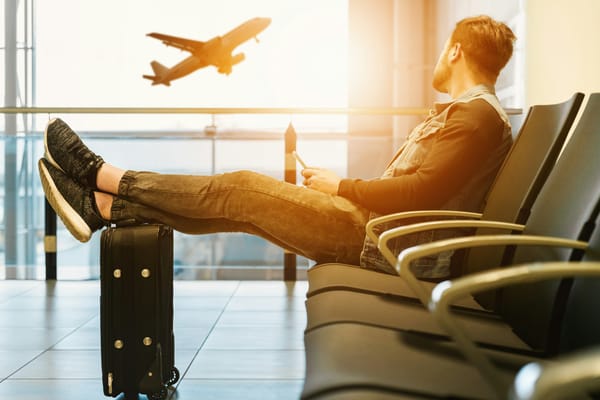
Traveling with kids over the holidays means sharing roads and airports with a record number of other people. AAA projected 122.4 million Americans would travel 50 miles or more from home between December 20, 2025, and January 1, 2026, with about 109.5 million of them going by car. Add early wake-ups, packed gifts, and short tempers, and it is easy to see why many parents dread the trip more than the visit.
Holiday travel with kids does not have to be that hard. A calmer trip during the holiday season is mostly about decisions you make weeks ahead: when you leave, how you get there, what you pack, and what you plan for the moments that usually go wrong. This plan covers flying and driving, with safety guidance from the American Academy of Pediatrics (AAP), the FAA, and TSA.
Six weeks out: pick the trip that fits your kids
Choose travel days with your children in mind
The cheapest or most popular travel day is not always the easiest one for a family. Before you book, think about:
- Time of day. An early flight can mean fewer knock-on delays, but a 4 a.m. wake-up can wreck the day for a toddler. For driving, many families leave at nap time or after dinner so young kids sleep for part of the trip.
- Flexible dates. Leaving a day or two before the peak, or coming home a day after Christmas or New Year's Day, can mean emptier roads, shorter lines, and lower fares.
- Refundable bookings. Kids get sick at the worst times. Paying a little more for refundable or changeable fares and hotels gives you room to adjust the itinerary.
- Direct flights over cheap ones. With young children, one missed connection can cost more in hotel, meals, and stress than the fare difference.
Check IDs and documents
For domestic flights, TSA does not require children under 18 to show ID, but adults need a REAL ID-compliant license or another accepted ID such as a passport. If you are crossing a border, every child needs a passport, and some countries have extra rules for minors traveling with only one parent. Check your airline's rules too, especially for lap infants, where airlines may ask for proof of age.
Decide whether your child gets a seat
The FAA allows children under 2 to fly as lap children, but it strongly recommends against it. According to the FAA, the safest place for a child under 2 on a plane is in an approved child restraint system in their own seat, because your arms cannot hold a child securely in unexpected turbulence. Buying a seat is the only way to guarantee you can use one. Look for a label on your car seat saying it is approved for use in aircraft.
Two weeks out: pack a bag for the trip itself
Most holiday trip problems happen in transit, so pack a separate bag for the trip itself:
- Snacks and a refillable water bottle for each child. Meal stops and airport food lines take longer during the holidays.
- A change of clothes for each young child, and a spare shirt for each adult.
- Medications in your carry-on, not your checked bag, plus a basic kit with a thermometer and the fever reducer your pediatrician recommends.
- Hand-washing gel and disinfectant wipes. The AAP recommends frequent hand-washing and bringing both to help prevent illness while traveling.
- Small toys, coloring books, and a tablet with downloaded shows, plus headphones. Do not count on reliable Wi-Fi or cell service.
- Chargers and a battery pack.
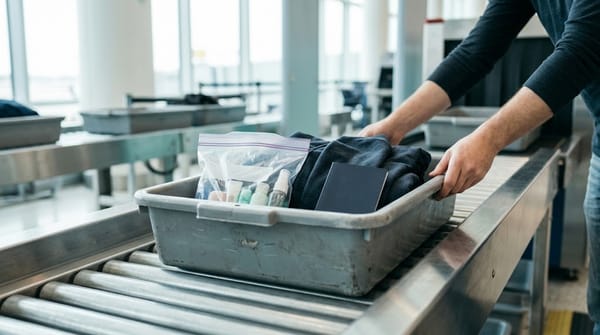
If you are flying, TSA allows formula, breast milk, toddler drinks, and baby food in quantities over 3.4 ounces in your carry-on. They do not need to fit in the quart bag, but you should tell the officer at the start of screening. Ice packs and liquid-filled teethers are allowed too. For a full list, our travel packing checklist covers the rest.
Leave gifts unwrapped, or ship them ahead. Wrapped gifts in bags may have to be opened at security, and shipping saves luggage space and baggage fees.
If you are driving: the road-trip plan
Car seats first
The AAP's guidance is to keep infants and toddlers rear-facing as long as possible, until they reach the highest weight or height their car seat allows. Children who have outgrown a harnessed seat should use a belt-positioning booster until the seat belt fits properly, usually around 4 feet 9 inches tall and between 8 and 12 years old. Children under 13 should ride in the back seat.
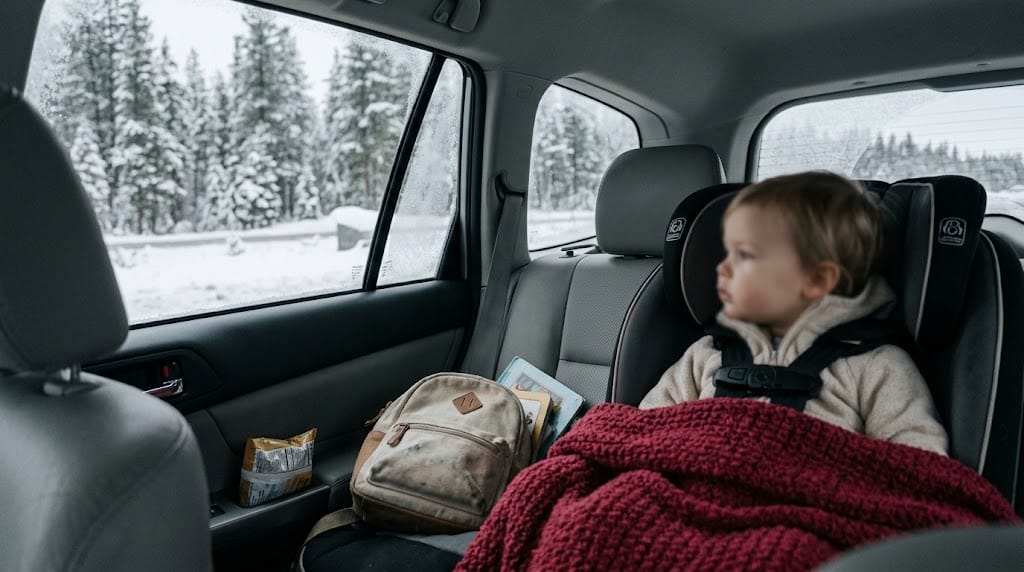
Winter adds one important rule. The AAP says bulky clothing, including winter coats and snowsuits, should not be worn under a car seat harness. In a crash, the padding flattens, leaving the harness too loose. Buckle children in regular clothes and put a coat or blanket over the harness once they are strapped in.
Renting a car? The AAP notes most rental companies can arrange a car seat, but selection may be limited. Check that it fits your child's size and age, looks in good condition, and comes with the instruction manual.
Plan the stops
The AAP suggests stopping about every two hours to give yourself and your child a break. Plan stops where kids can actually move, such as a rest area with grass or a park, instead of a quick gas-and-go. Build those stops into your arrival time so they do not feel like delays.
Keep them busy
Pick audio everyone can agree on, then rotate. Our list of road trip podcasts has options, and our sister site Parents and Pets has a list of car games for kids who get bored that need nothing but your voices. Hand out new activities slowly. One new book or toy every hour or two lasts longer than a full bag on the first mile.
If you are flying: the airport plan
Get through security with less stress
At the checkpoint, TSA lets children 12 and under keep their shoes, light jackets, and hats on. Infants and small children come out of strollers and car seats and are carried through the metal detector, while strollers and car seats go through the X-ray. TSA says children will not be separated from their parent or guardian during screening.
Give yourself extra time. Holiday security lines move slower, and family lanes are not available at every airport. Our stress-free airport tips cover timing and what to do before you leave home.
On the plane
- Ears. For ear pain during descent, the AAP suggests letting an infant nurse or drink from a bottle, and having older children chew gum or drink through a straw.
- Snacks and activities. The AAP recommends packing a bag of toys and snacks for the flight.
- Seatbelt on. Keep your child buckled, or in their car seat, whenever they are seated.
- Medications. Do not give a child any medicine to make them sleep on a flight unless your pediatrician has recommended it.
At the destination: keep some routine
Holiday visits break every routine at once: late dinners, new beds, more sugar, more people. You cannot keep the whole schedule, but you can keep a few anchors:
- Protect sleep. Bring the familiar blanket, sound machine, or night light. Try to keep bedtime within an hour of normal.
- Plan quiet time. A short break in a quiet room after a big meal or before a long evening can head off a meltdown.
- Check the house. Grandparents' homes are often not childproofed. Look for medications on nightstands and in purses, small decorations, button batteries, and unsecured stairs. Keep the Poison Help line, 1-800-222-1222, in your phone. If you think your child swallowed something harmful, call it right away, and call 911 if your child is having trouble breathing or is unresponsive.
- Agree on screen time and treats. Decide together with grandparents and extended family, before you arrive, what the limits are, so you are not negotiating in front of relatives.
When things go wrong
Even with a good plan, something usually goes sideways. A few ways to recover quickly:
- Flight delayed or canceled? Rebook through the airline app while you wait in line. If the airline cancels or significantly changes your flight and you decide not to travel, U.S. Department of Transportation rules entitle you to a refund.
- Child gets sick? Call your pediatrician's office. Many have a 24-hour nurse line that can advise you on whether to visit urgent care where you are.
- Meltdown in public? Step away from the crowd, lower the volume, and offer water and a snack. Hunger and tiredness cause most travel meltdowns.
Some families decide the best holiday travel tip is to host instead and ask relatives to come to them, at least every other year. For more ideas on keeping family trips with kids manageable, see our Disneyland tips for family trips, which uses many of the same strategies on a smaller scale.
FAQ
Do kids need ID to fly over the holidays?
Not for domestic flights. TSA does not require children under 18 to show ID when flying within the U.S. Airlines may ask for proof of age for lap infants, and international trips require a passport for every child.
Should my baby fly in a car seat?
The FAA says the safest place for a child under 2 is in an approved child restraint system in their own seat, not on a lap. That requires buying a seat for your child.
How often should we stop on a road trip with kids?
The AAP suggests a break about every two hours.
Can my child wear a winter coat in the car seat?
No. The AAP says bulky coats and snowsuits should not be worn under the harness. Buckle your child in, then lay the coat or a blanket over the straps.
Can I bring breast milk or formula through TSA?
Yes. TSA allows formula, breast milk, toddler drinks, and baby food over 3.4 ounces in your carry-on. Tell the officer at the start of screening.
Sources
- AAA: Year-end holiday travel forecast (2025)
- AAP HealthyChildren.org: Tips for safe and stress-free family travel
- AAP HealthyChildren.org: Winter car seat safety tips
- FAA: Child safety on airplanes
- TSA: Traveling with children
- TSA: Acceptable identification
- Federal Register: U.S. DOT final rule on airline refunds
- National Capital Poison Center: Poison Help