US Beach Getaways for Early Summer: Where to Go by Region and What to Know
Planning a beach getaway for early summer, from Memorial Day weekend through June? Two things decide which beach destination fits: how warm the water is, and whether lifeguards are on duty yet. NOAA's Coastal Water Temperature Guide gives June averages of about 63 degrees F at Chatham on Cape Cod, about 68 at Ocean City, Maryland, and Duck, North Carolina, about 84 to 86 at Pensacola and Key West, and about 56 on the northern Oregon coast. Lifeguard seasons vary just as much: the National Park Service staffs Cape Hatteras beaches from Memorial Day weekend, but Cape Cod National Seashore not until late June.
Below are well-known US beaches by region, with lifeguard dates, fees and rules from the National Park Service, state parks and the towns themselves, checked in October 2026 against the latest posted season. Fees and dates for summer 2027 may change, so confirm them before you book a rental. A safety section on beach flags and rip currents follows the list.
New England: Cape Cod National Seashore
Cape Cod National Seashore covers the Atlantic side of the Outer Cape, with long sandy beaches backed by dunes and cliffs. The park's lifeguards are on duty from late June through Labor Day. Before then the beaches are open but have no lifeguards.
- Which beaches: the six with entrance fees and summer lifeguards are Coast Guard and Nauset Light in Eastham, Marconi in Wellfleet, Head of the Meadow in Truro, and Race Point and Herring Cove in Provincetown.
- Fees: $15 per person 16 and older on foot or by bike; children under 16 are free. Coast Guard Beach is reached by a shuttle from the Little Creek lot, included in the fee.
- Water: June averages about 63 degrees F at Chatham, per NOAA, well below the Gulf or the Carolinas.
Mid-Atlantic: Ocean City, Assateague and Virginia Beach
Ocean City, Maryland is a classic boardwalk beach town. The town says its boardwalk runs 2.9 miles from the Inlet to 27th Street and the town has ten miles of free public beach. The Ocean City Beach Patrol starts guarding on the Saturday of Memorial Day weekend, 10 am to 5:30 pm every day. The beach is open 5 am to midnight. NOAA's Ocean City Inlet station averages about 68 degrees F in June.
Assateague Island National Seashore, just south of Ocean City, is the quieter option: an undeveloped barrier island known for its wild horses. In summer the horses often wander the beach and campgrounds. It is illegal to approach within 40 feet of them, and the park says even that can be too close. The Maryland district has a lifeguarded beach from Memorial Day to Labor Day, and pets are not allowed on it in season.
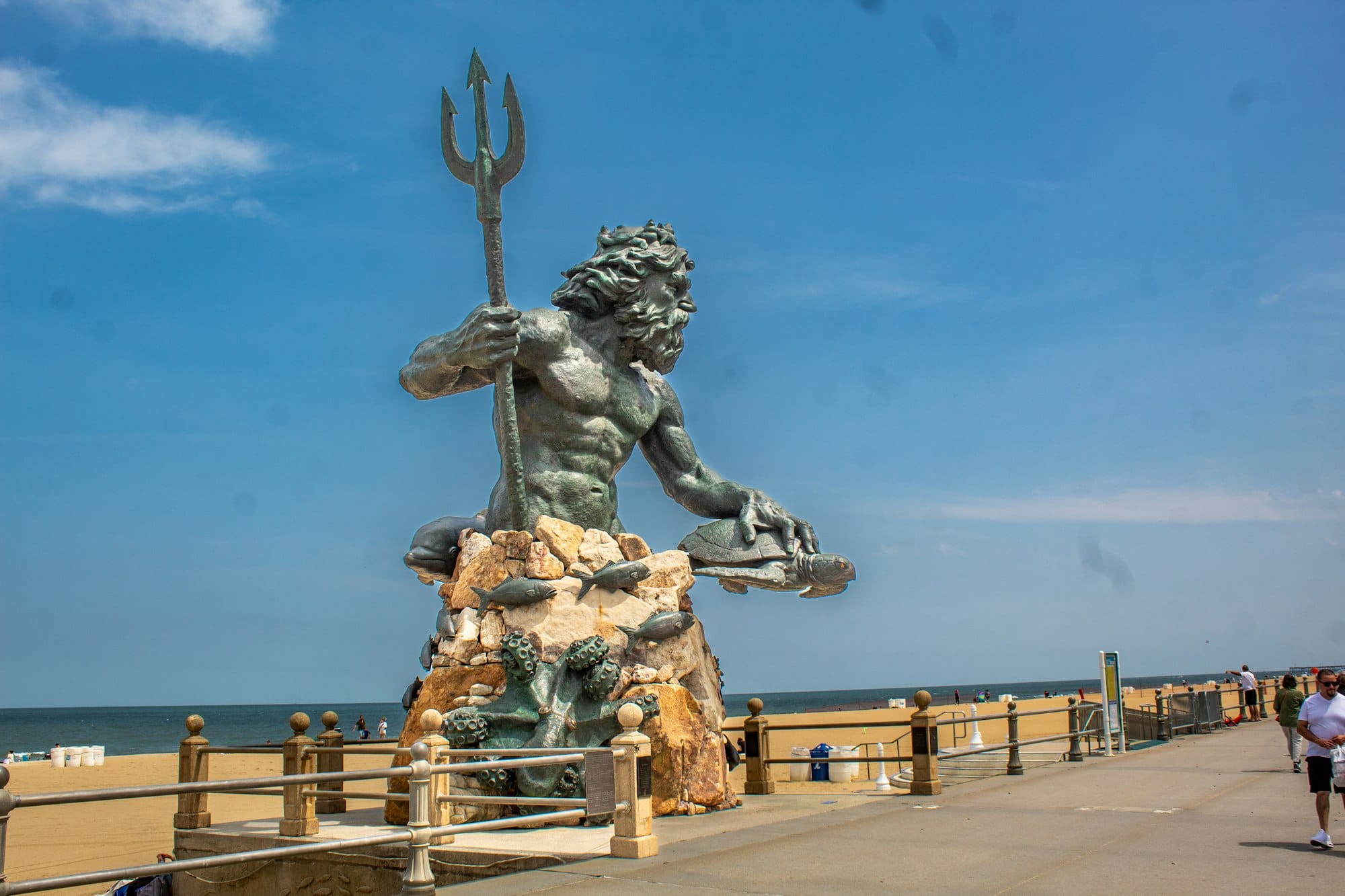
Virginia Beach has a boardwalk of about three miles, from 2nd to 40th Streets, with the King Neptune statue at 31st Street in Neptune Park. The city's tourism office lists lifeguards on the main Oceanfront from Memorial Day to Labor Day. The beachfront promenade gives easy access to a bike ride, the sand and restaurants on the same strip.
North Carolina: Cape Hatteras National Seashore
Cape Hatteras National Seashore covers much of North Carolina's Outer Banks, with miles of beach between small towns. The park has five lifeguarded beaches, staffed from Memorial Day weekend through Labor Day, 9 am to 5 pm: Coquina Beach, Rodanthe Beach Access, Old Lighthouse Beach, Frisco Beach and Ocracoke Beach. Ocracoke is reached by ferry. The park urges visitors to check NOAA's rip current forecast before swimming and to use the guarded beaches.
- Lighthouses: the Cape Hatteras Lighthouse was closed to climbing for the 2026 season because of restoration work, while the Bodie Island Lighthouse offered climbs from late April into the fall. The park has not posted 2027 climbing dates yet, so check before you plan around a climb.
- Water: NOAA's Duck station averages about 68 degrees F in June.
South Carolina: Myrtle Beach
Myrtle Beach is a big East Coast beach vacation town, with a long oceanfront of high-rise hotels, piers, a Ferris wheel and the usual beach-town mini golf and amusement stops for family fun. For a calmer beach day, Myrtle Beach State Park, run by South Carolina State Parks, has its own stretch of public beach and a fishing pier. The state park is open 6 am to 10 pm from March through November. Admission is $8 for adults and $4 for children 6 to 15. You do not need a South Carolina fishing license to fish from the pier, but there is a daily pier fee. Water off South Carolina is warm by June: NOAA's Charleston station averages about 82 degrees F.
Florida and the Gulf Coast
Gulf Islands National Seashore protects white sand beaches on the barrier islands near Pensacola, including the Fort Pickens, Santa Rosa (Opal Beach) and Perdido Key areas. A standard pass is $25 per private vehicle or $15 per person from January through September, good for seven days at the Florida fee areas, and the park takes no cash. Johnson Beach and Langdon Beach have lifeguards from Memorial Day to Labor Day. The park warns that Johnson Beach can close when it reaches capacity between April and September, so arrive early. NOAA's Pensacola station averages about 84 degrees F in June.
Key West has snorkeling right off the beach. Fort Zachary Taylor Historic State Park, at the southern tip of the island, has a beach for swimming and snorkeling over a rocky bottom, so bring water shoes. The park is open 8 am to sundown. Key West's June water averages about 86 degrees F, per NOAA.
Padre Island National Seashore in Texas protects about 70 miles of barrier island, which the park calls the longest stretch of undeveloped barrier island in the world. Most of the beach is open to driving; Malaquite Beach, about 4.5 miles long, is the only stretch closed to cars, which makes it the easy pick for families. Port Aransas, to the north, averages about 85 degrees F water in June.
California and Oregon
The Pacific is cold in early summer, so West Coast beach trips are more about the coastline, tide pools and a stroll on the sand than swimming. NOAA's Santa Monica station averages about 66 degrees F in June, and Garibaldi, Oregon, about 56.
- Santa Monica: the pier, built in 1909, is California's oldest pleasure pier and an attraction in its own right. It holds Pacific Park, the only amusement park on a pier on the West Coast, and the "End of the Trail" sign for Route 66.
- Venice Beach: just south, the Venice boardwalk runs over two miles with street performers, vendors and a free skate park. The Marvin Braude Bike Trail runs about 22 miles along the sand, from Will Rogers State Beach to Torrance Beach.
- Cannon Beach, Oregon: Haystack Rock rises from the beach, and tufted puffins nest on it from about April to late August. The tide pools around it are a protected marine garden, and the rock itself is closed above the high tide line. Volunteers are out at low tide in spring and summer.
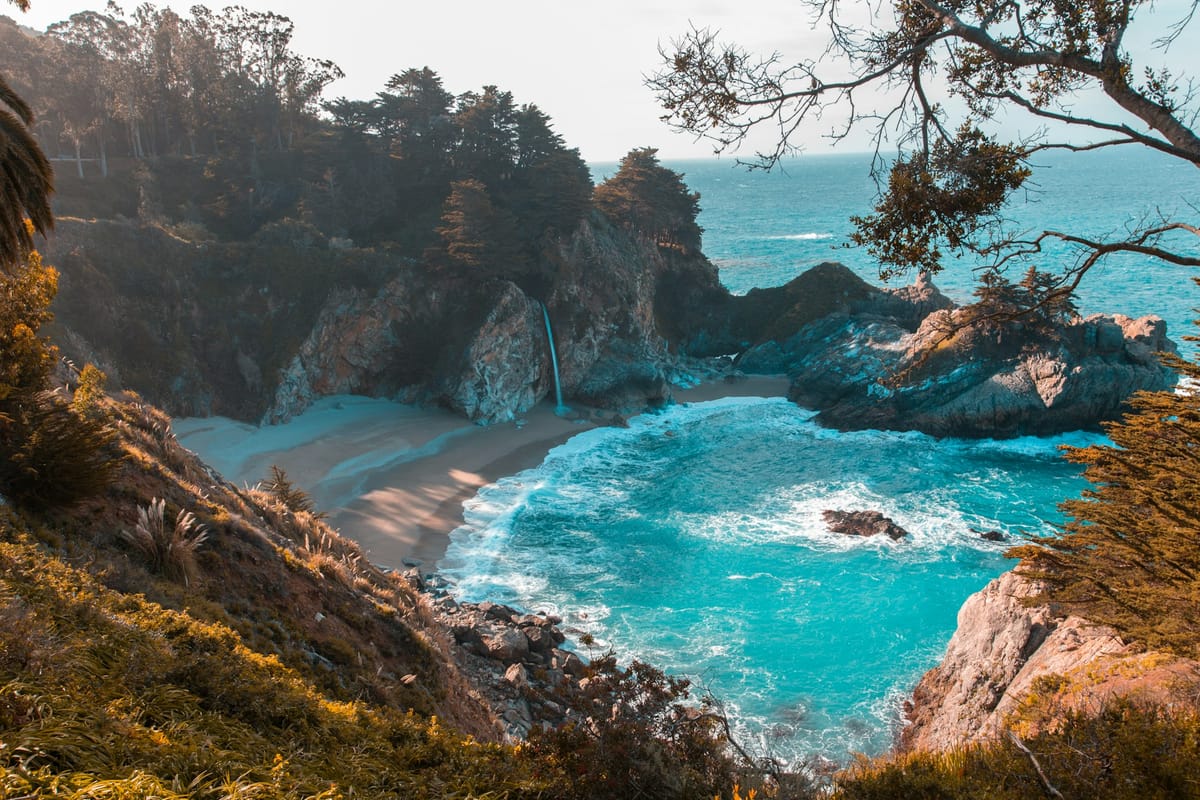
- Big Sur: McWay Falls in Julia Pfeiffer Burns State Park, where a waterfall drops onto a small cove, is one of the most photographed spots on the coast. You can only look: the beach and falls area are off limits, and the Overlook Trail has been closed for repairs, leaving a small roadside viewing area on Highway 1. Check California State Parks before you go.
Heading farther south? Our San Diego guide covers the city's beaches. For warm water in June on the Pacific side, Hawaii is the answer: Honolulu averages about 80 degrees F. Start with our Hawaii guide for first-time visitors.
Beach safety: flags and rip currents
- Swim near a lifeguard. Several of the beaches above only have lifeguards from Memorial Day or late June.
- Read the flags. The National Weather Service explains the common system: green means low hazard, yellow medium, red high hazard with strong surf or currents, and double red means the water is closed (you can be fined or arrested for going in). A purple flag means dangerous marine life. Flags are set by local beach patrols and can vary, and no flag does not mean the water is safe.
- Check the rip current risk. The NWS Surf Zone Forecast rates rip current risk as low, moderate or high each day.
- If a rip current pulls you out, NOAA and the National Park Service say not to fight it. Swim parallel to the shore until you are out of the current, then swim back in at an angle.
Planning tips for an early-summer beach trip
- Know the season start. Lifeguards, shuttles and fee booths often start on Memorial Day weekend or late June. Before that, beaches get quieter but services are thinner.
- Arrive early on weekends. Beachgoers fill popular lots by late morning, and some beaches, like Johnson Beach, close when they reach capacity.
- Pick the best times to visit for your trip. For warm swimming water in June, look south to the Carolinas, the Gulf and the Keys. For cooler days, quiet beaches and tide pools, look north and west.
- Look at national parks too. Several of these beaches are national seashores, run by the National Park Service. Our US national parks guide covers how park passes and fees work.
Sources: NOAA National Centers for Environmental Information (Coastal Water Temperature Guide), National Weather Service, National Park Service (Cape Cod, Assateague Island, Cape Hatteras, Gulf Islands and Padre Island national seashores), Town of Ocean City, Visit Virginia Beach, South Carolina State Parks, Florida State Parks, City of Santa Monica, City of Los Angeles Recreation and Parks, Discover Los Angeles, City of Cannon Beach, US Fish and Wildlife Service, California State Parks. Checked October 2026.