Oktoberfest in Munich: A Planning Guide for Dates, Tents, Costs and Rules
Oktoberfest takes over the Theresienwiese, a big open field in central Munich, for about two and a half weeks each fall. The official site, oktoberfest.de, lists the next one for Saturday, September 18 to Sunday, October 3, 2027. Entry to the grounds and the beer tents is free. You pay for beer, food and rides. Getting a seat in a tent takes the most planning: the city counted 7.4 million visits in 2026. Most tents open table bookings by spring, so that is when to start planning for next year.
This guide covers the rules worth knowing before you book. Every date, price and rule here comes from the official Oktoberfest and City of Munich websites, checked in late October 2026. Hours, prices and rules change from year to year, so check oktoberfest.de again before your trip.
How the Oktoberfest celebration started
The first Oktoberfest was a royal wedding party. Crown Prince Ludwig of Bavaria, later King Ludwig I, married Princess Therese of Saxe-Hildburghausen on October 12, 1810. Five days later, on October 17, 1810, a horse race was held on a meadow outside the city gates. The meadow was named after the bride, which is where Theresienwiese comes from. Locals still call the festival the Wiesn.
The festival has grown a lot since then. Big brewery halls appeared in the 1890s, and the first large beer tent went up in 1898. Since 1950, the mayor of Munich has opened the festival by tapping the first keg. Thomas Wimmer did it first, and the official history notes it took him 17 strokes.
When it runs and opening hours
Oktoberfest opens on a Saturday in September and runs into early October. On opening day the tents open at 9 am, and at 12 noon the mayor taps the first keg with the call "O'zapft is!" Beer is served after that. Rides on opening day run from noon to midnight.
- Grounds: Monday to Thursday 10 am to 11:30 pm, Friday 10 am to midnight, Saturday 9 am to midnight, Sunday 9 am to 11:30 pm.
- Beer tents: open at 10 am on weekdays and 9 am on weekends, and close at 11:30 pm. Last beer is 10:30 pm in the large tents and 11 pm in the small ones.
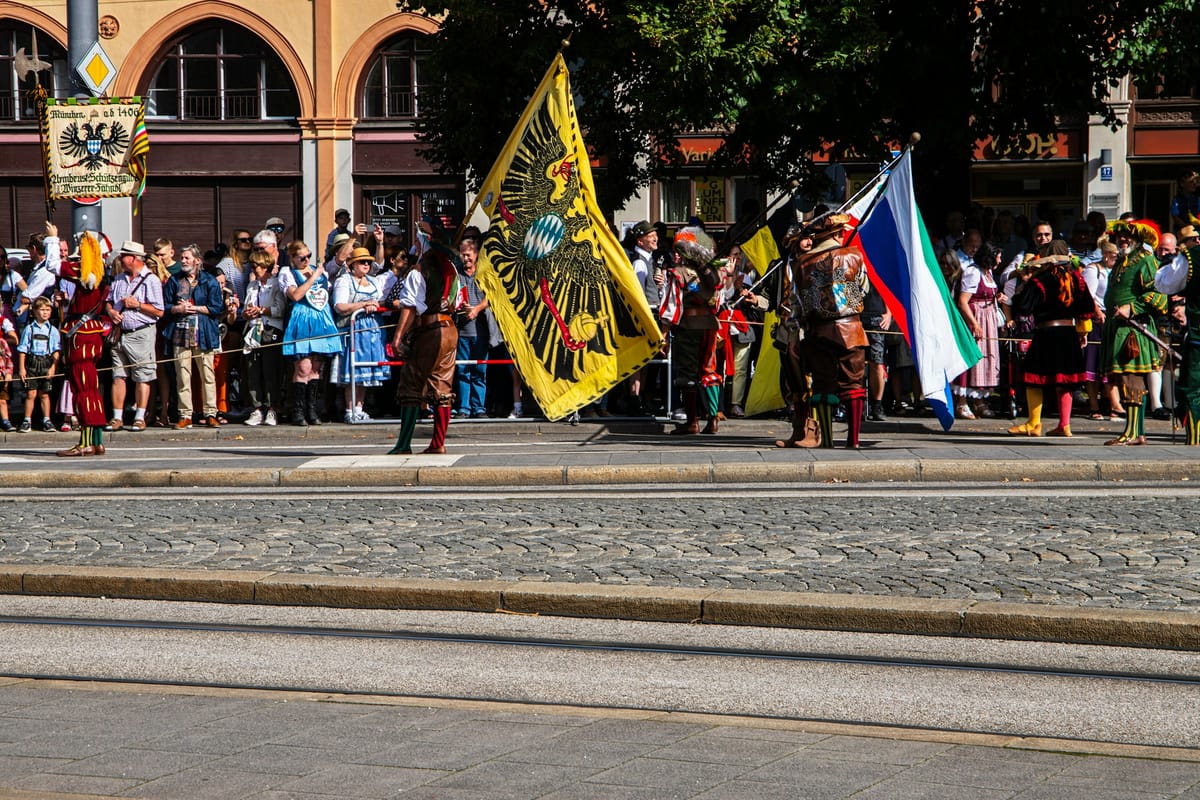
- Traditions: the landlords' parade opens the first Saturday, a costume and riflemen's parade runs through the city the first Sunday, a brass band concert fills the second Sunday, and a gun salute closes the last day.
Is there an entry fee, and what does it cost?
There is no ticket to enter. The festival grounds and the tents are free. The one exception is the Oide Wiesn, a separate historic section with old-style rides, Bavarian music and its own tents. It charges 4 euros to enter, children up to 14 get in free, and entry is free after 9 pm.
Your costs are beer, food and rides. In 2026, a Mass (a one-liter mug) cost between 14.80 and 15.90 euros, depending on the tent. Each carnival ride and booth sets its own price, and you pay at each one. Some tents take cards, but a few are cash only, so bring euros. ATMs stand at the festival entrances.
Beer tents and reservations
Most visitors spend their time in the beer tents, each run by its own host. There is no central reservation office. You book a table directly with each tent, and most tents open booking for the next festival by spring. Watch the tents' own websites.
- Minimum order: a reserved spot usually comes with vouchers worth at least two Mass of beer and half a roast chicken.
- Walking in: in the big tents, part of the seating is never reserved. On weekdays it is a quarter of the seats; on weekends and public holidays it is 40 percent until 3 pm. The official site warns that in the evenings, on weekends and in groups you may not find a seat at all.
- Resale: reservations may not be resold, and hosts often cancel ones that were. It warns against buying them at auctions or from unofficial sellers.
Bags, strollers and family days
Security checks every bag at the entrances. Bags may hold no more than 3 liters, or about 8 by 6 by 4 inches. Larger luggage can be left at storage points at some entrances for 5 euros. Glass bottles are not allowed on the grounds.
The festival works for families in the daytime. Tuesdays are Family Day, with reduced prices and discounts until 7 pm. Strollers are allowed until 6 pm, but never on Saturdays or on October 3. After 8 pm, children under 6 may not be in the beer tents, even with their parents, and anyone under 16 must be with a parent or guardian.
Lederhosen and dirndls, the traditional Bavarian clothes, are common but not required.
Getting there
Take public transit. There is no parking at the Theresienwiese, and the city asks drivers to use park-and-ride lots outside the center. The closest subway stops are Theresienwiese and Schwanthalerhoehe on the U4 and U5 lines, and Goetheplatz and Poccistrasse on the U3 and U6. The Hackerbruecke S-Bahn stop may be closed when crowds are heavy, especially on weekend evenings. If you are building a longer trip, see our guide to planning ten days in Europe.
Oktoberfest in the US
If Munich is not in the cards, many US towns hold their own German-style festivals each fall. Two well-known ones:
- Oktoberfest Zinzinnati, Cincinnati, Ohio: first held in 1976. The 2026 festival ran September 17 to 20 at Sawyer Point and Yeatman's Cove on the riverfront, with free admission.
- Leavenworth Oktoberfest, Washington: held on weekends in October in this Bavarian-themed mountain town. Tickets are required, you must be 21 to drink, and children 12 and under get in free.
Both post their next dates on their official websites. For more events worth planning a trip around, browse our festivals around the world guide.
Sources: oktoberfest.de (dates, opening hours, history, entry, reservations, security, children and family, events, 2026 final report); City of Munich, muenchen.de visitor FAQ; Oktoberfest Zinzinnati festival information; Leavenworth Chamber of Commerce, leavenworth.org.