The Largest Football Stadiums in the US, College and NFL
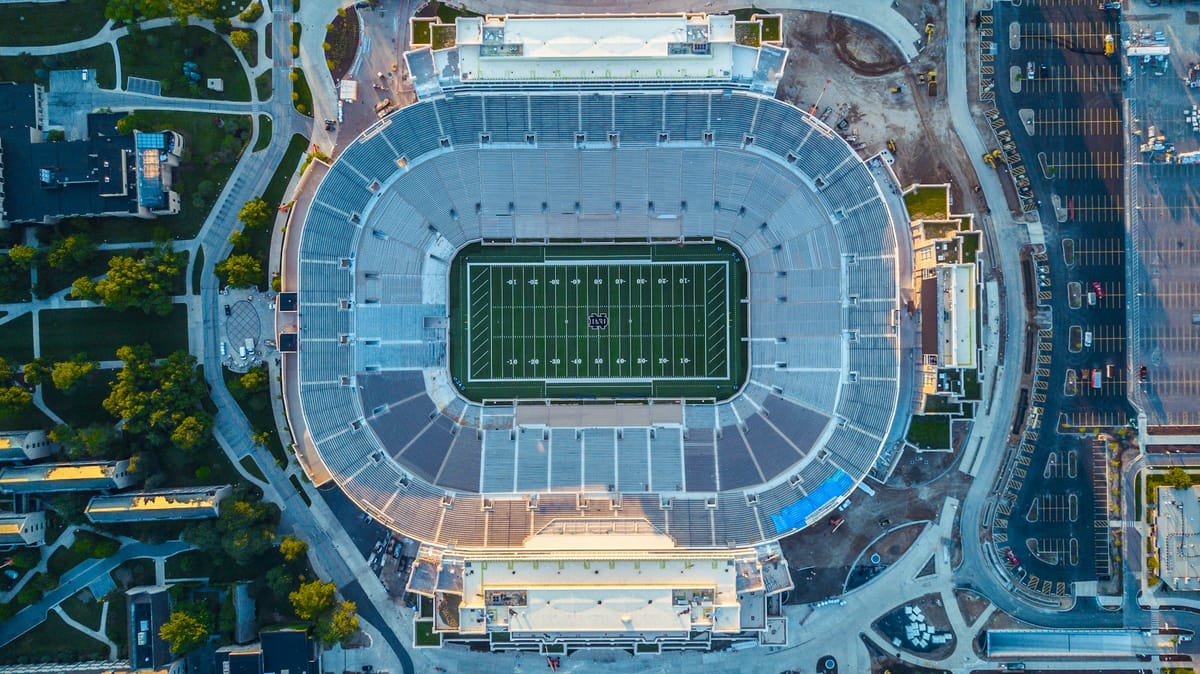
If you want to sit in one of the biggest crowds in American football, plan a fall Saturday on a college campus. Eight college football stadiums in the United States are listed by their own schools at 100,000 seats or more. MetLife Stadium in New Jersey, one of the largest NFL venues, lists 82,500 for football.
The numbers below come from each school's or stadium's own website, checked in October 2026. Seating capacity changes after almost every renovation, and real crowds often run above the official figure, so look at the stadium's page again before you plan a trip around a number.
Two planning points apply at almost every stadium here. Bags are limited: the NFL allows one clear bag no larger than 12 by 6 by 12 inches plus a small clutch, and most big college programs post similar clear-bag rules on their game-day pages. And the stadiums are closed to walk-in visitors on most days, so if you want to see one without a game, book a tour through the school or stadium.
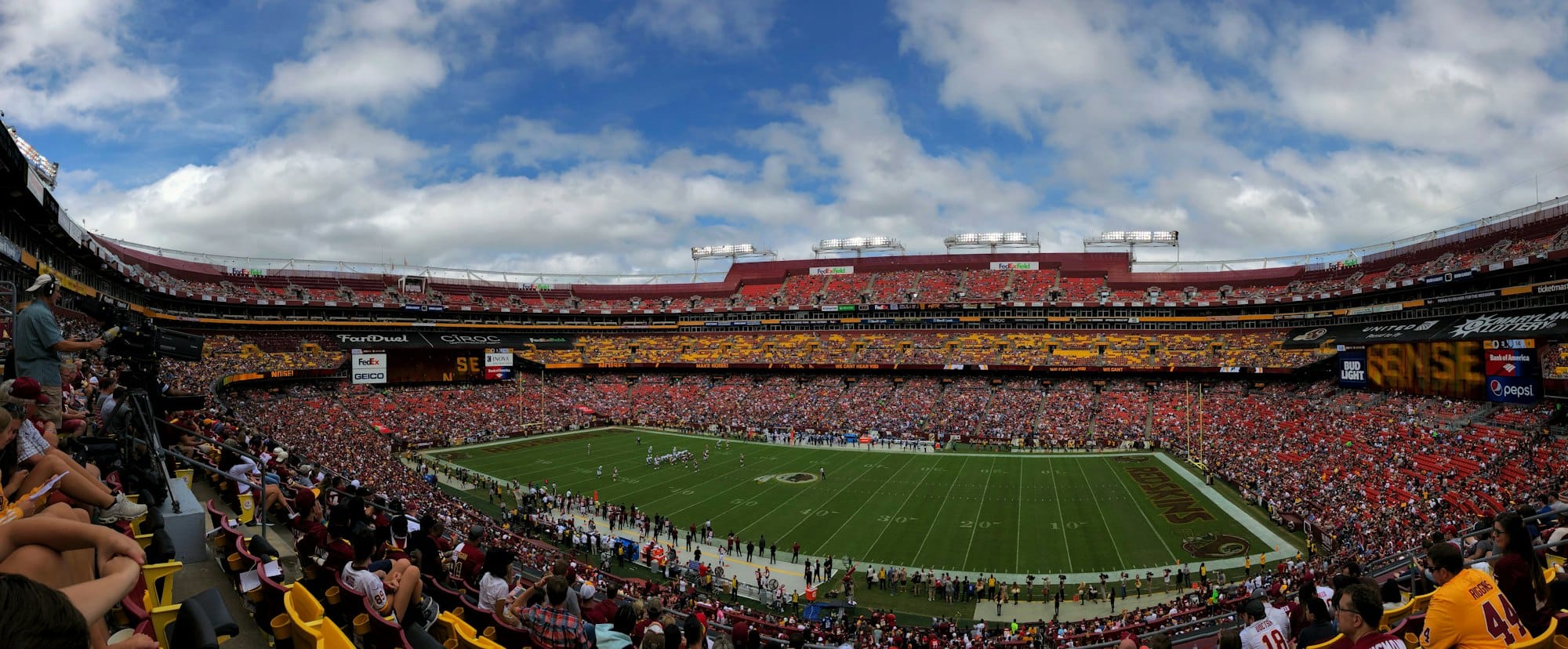
Ten big football stadiums by listed capacity
- Michigan Stadium in Ann Arbor, Michigan, with 107,601 seats (University of Michigan)
- Beaver Stadium in State College, Pennsylvania, with no final number during its rebuild (Penn State says crowds routinely top 107,000)
- Kyle Field in College Station, Texas, with 102,733 (Texas A&M)
- Tiger Stadium in Baton Rouge, Louisiana, with 102,321 (LSU)
- Ohio Stadium in Columbus, Ohio, with 102,041 on Ohio State's stadium page
- Neyland Stadium in Knoxville, Tennessee, with 101,915 (Tennessee)
- Darrell K Royal-Texas Memorial Stadium in Austin, Texas, with 100,119 (Texas)
- Saban Field at Bryant-Denny Stadium in Tuscaloosa, Alabama, with 100,077 (Alabama)
- Sanford Stadium in Athens, Georgia, with 93,033 (Georgia)
- MetLife Stadium in East Rutherford, New Jersey, with 82,500 for football (MetLife Stadium)
Nine of these 10 are on college campuses. Most grew in stages over about a century of added decks and end zone projects. NFL teams have built newer stadiums with more suites and fewer total seats, so the largest stadium in the country for a football game is still a college one.
Michigan Stadium (the Big House)
Michigan Stadium in Ann Arbor is the largest stadium in America by listed capacity at 107,601. It opened on Oct. 1, 1927, and Michigan says the capacity has been changed 10 times since. The stadium has hosted crowds well above that listed number: the Big House holds the attendance record the school calls the largest ever at a college or NFL game: 115,109 for Michigan vs. Notre Dame on Sept. 7, 2013.
Michigan plans a year-long 100th anniversary celebration for the stadium in 2027, so expect special events around home games that season. The stadium is not open for walk-in visits or drop-in photos. Michigan offers guided tours on weekdays for a fee, booked through the athletics department's Special Events Office.
Beaver Stadium (Penn State, mid-renovation)
Beaver Stadium has been Penn State's home on its current site since 1960. Its highest listed capacity was 107,282 after a 2001 expansion. Penn State is now in the middle of a $700 million renovation running from 2024 to 2027 and has not published a final seating number for the finished stadium. Penn State's own stadium page says the venue routinely welcomes crowds of more than 107,000.
Because seating is changing year to year during construction, check Penn State's football page for the current layout and entry gates before you buy tickets.
Kyle Field (Texas A&M)
Kyle Field in College Station seats 102,733 after a $485 million redevelopment that debuted for the 2015 season. Texas A&M lists it as the largest stadium in the SEC. Like most stadiums on this list, it grew in stages: the school's timeline shows capacity around 70,000 after the third decks went up in 1980 and 82,589 after the north end zone project in 1999.
Tiger Stadium (LSU)
Tiger Stadium in Baton Rouge, home of LSU football, has had a capacity of 102,321 since a south end zone expansion opened in 2014. The original stands date to 1924 and seated about 12,000, according to LSU. Kickoff times for many college games are set only a week or two out, so check the time before you book a flight home the same night.
Ohio Stadium (Ohio State)
Ohio Stadium in Columbus opened in 1922. The first game was against Ohio Wesleyan on Oct. 7, 1922, which is why you will see "opened in 1922" on every Ohio State history page. Architect Howard Dwight Smith designed it, and its original capacity was 66,210. Ohio State's stadium page lists the present capacity as 102,041, though other Ohio State figures run a little higher, so check the current number. The largest crowd on record is 110,045, for Ohio State vs. Michigan in 2016. A major renovation from 1999 to 2001 made the once-portable south stands permanent.
Neyland Stadium (Tennessee)
Neyland Stadium in Knoxville started in 1921 as a set of west stands with 3,200 seats. A renovation finished before the 2022 season, with new club and social deck spaces, set the current capacity at 101,915. Tennessee lists stadium tours on its Neyland Stadium page, so you can see the inside on a day without a game.
Darrell K Royal-Texas Memorial Stadium (Texas)
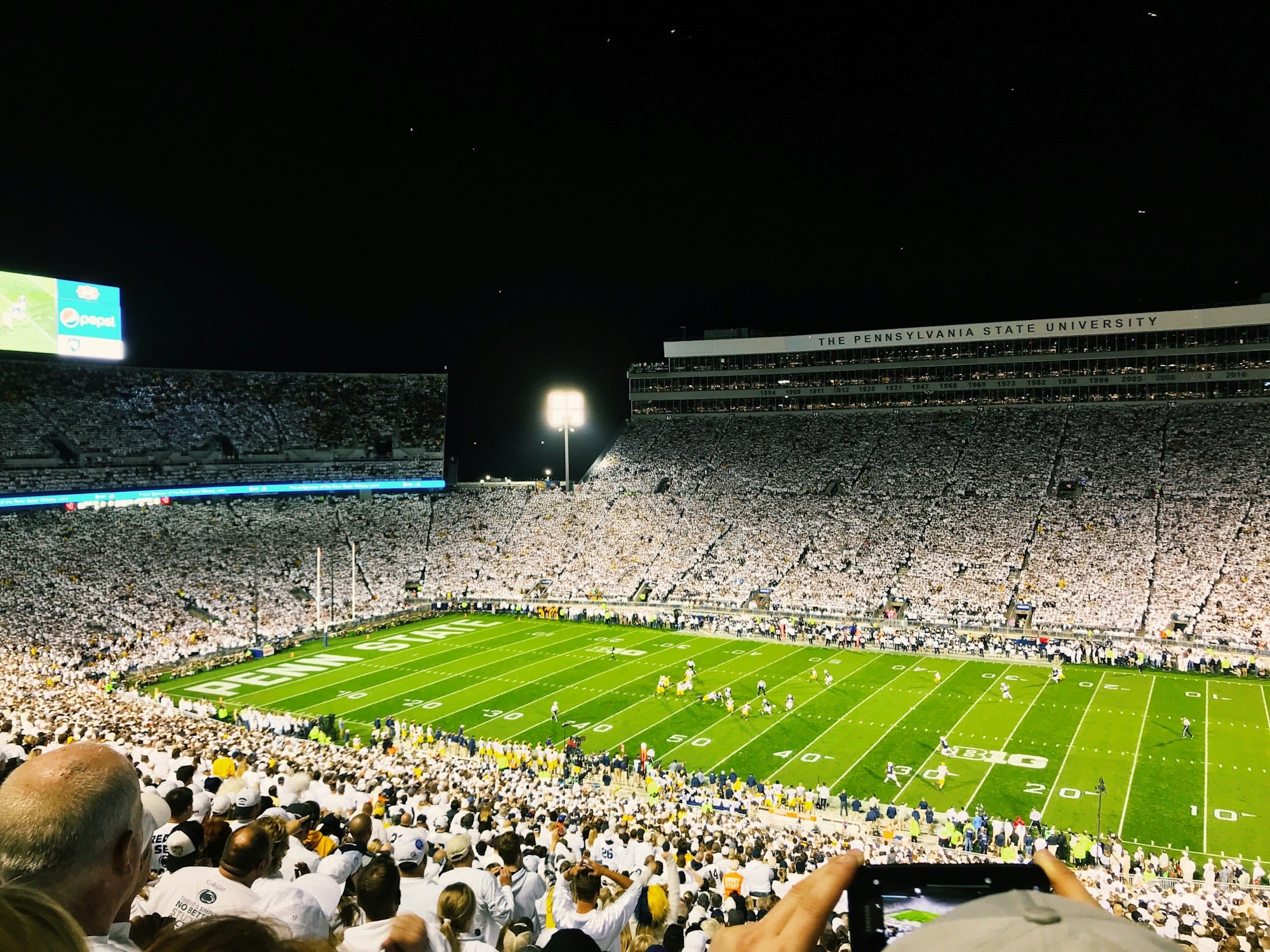
Darrell K Royal-Texas Memorial Stadium in Austin opened in 1924 with room for 27,000. A south end zone project in 2009 brought it to its current 100,119, and a UT News story from September 2026 calls it the eighth largest stadium of any kind in the United States. If you are planning a longer Austin weekend around a home game, book lodging as soon as the schedule is out; big games fill the city.
Saban Field at Bryant-Denny Stadium (Alabama)
Bryant-Denny Stadium in Tuscaloosa now carries the full name Saban Field at Bryant-Denny Stadium. A 2020 renovation that added premium seating moved capacity to 100,077, down from 101,821. That older figure is also the stadium's record crowd. Alabama is the last of the eight college venues on this list that clear 100,000.
Just under 100,000 (Sanford Stadium)
Sanford Stadium in Athens, home of the Georgia football team, sits at 93,033 after a 2023 and 2024 project on the press box and concourses, according to Georgia's 2026 stadium history. Its record home crowd is 93,246, set against Notre Dame in 2019. It is the next stop for anyone working through the big SEC stadiums after Alabama, LSU, Tennessee and Texas A&M.
The largest NFL stadiums
NFL stadiums are smaller than the big college bowls, but a few are still huge.
- MetLife Stadium, East Rutherford, New Jersey: home of the Giants and Jets, 82,500 for football and soccer. It opened on April 10, 2010, and it was the host stadium for the FIFA World Cup 2026 Final.
- AT&T Stadium, Arlington, Texas: the Dallas Cowboys describe it as a 100,000-plus capacity stadium when standing room and expansion areas are used, though regular NFL game seating is lower. It runs self-guided tours on a limited basis, and group tours must be booked at least a week ahead.
Any NFL game in either building feels big, but if your goal is the largest crowd for a football game, the college venues above win.
Los Angeles Memorial Coliseum
The Los Angeles Memorial Coliseum is home to USC football and lists a capacity of 77,500. It is the only stadium on this page that has hosted the Olympic Games, in 1932 and 1984, and it is set to host again for the 2028 Games in Los Angeles. Even if it is not one of the largest stadiums in the world by seats anymore, few football venues carry more history.
Tips for visiting a big football stadium
- Check the bag policy. The NFL's policy allows one clear plastic, vinyl or PVC bag no larger than 12 by 6 by 12 inches, or a one-gallon clear freezer bag, plus a small clutch no larger than 4.5 by 6.5 inches. Most big college programs have their own clear-bag rules. Check the team's site the week of the game, since rules are updated often.
- Book tours separately. Most of these stadiums are closed to the public on non-event days. Michigan, Tennessee and AT&T Stadium all list tours; book ahead and expect no tours on game weekends.
- Plan the whole day. A home game at a 100,000-seat stadium fills the town. Lodging near campus can fill early for big games, and parking is often reserved or sold in advance. Read the school's game-day page for shuttles and parking before you go.
- Go early for the scene. Many fans plan the trip around the tailgate as much as the game. Our guide to the best tailgate parties in the NFL covers how lots and tailgating rules work.
- Pick the season. College home games are played in the fall, which lines up with autumn color in many of these college towns. Pair a game with a fall foliage trip.
Capacities change, so check before you go
Every stadium on this list has gone through renovation more than once, and several are being rebuilt right now. A stadium that has hosted a crowd far above its listed number can also drop seats when it adds clubs or suites. Treat these figures as a snapshot from each school's or stadium's own page in October 2026, and check the official page before your trip.
Sources: University of Michigan Athletics (mgoblue.com), Penn State Athletics (gopsusports.com), Texas A&M Athletics (12thman.com), LSU Athletics (lsusports.net), Ohio State Athletics (ohiostatebuckeyes.com), Tennessee Athletics (utsports.com), Texas Athletics (texaslonghorns.com) and UT News, Alabama Athletics (rolltide.com), Georgia Athletics (georgiadogs.com), MetLife Stadium, Dallas Cowboys and AT&T Stadium, Los Angeles Memorial Coliseum, and the NFL clear bag policy (NFL.com). Checked October 2026.